
The Diddy documentary didn’t set out to resurrect a debate about 1970s cinema, but it did something even bigger: it reopened a conversation about the cost of visibility in Black entertainment. The film’s exploration of power, persona and exploitation mirrors a struggle that has been around far longer than Bad Boy Records, fame or even hip-hop itself.
It’s the same cultural tug-of-war that defined Blaxploitation, a genre that changed everything while breaking a few things in the process.
The documentary forces viewers to consider how Black imagery is crafted, controlled and consumed, and who benefits from it. Once you sit with those questions, the echoes of the Blaxploitation era become impossible to ignore.
The good: a cinematic rebellion that said, “We’re done waiting.”
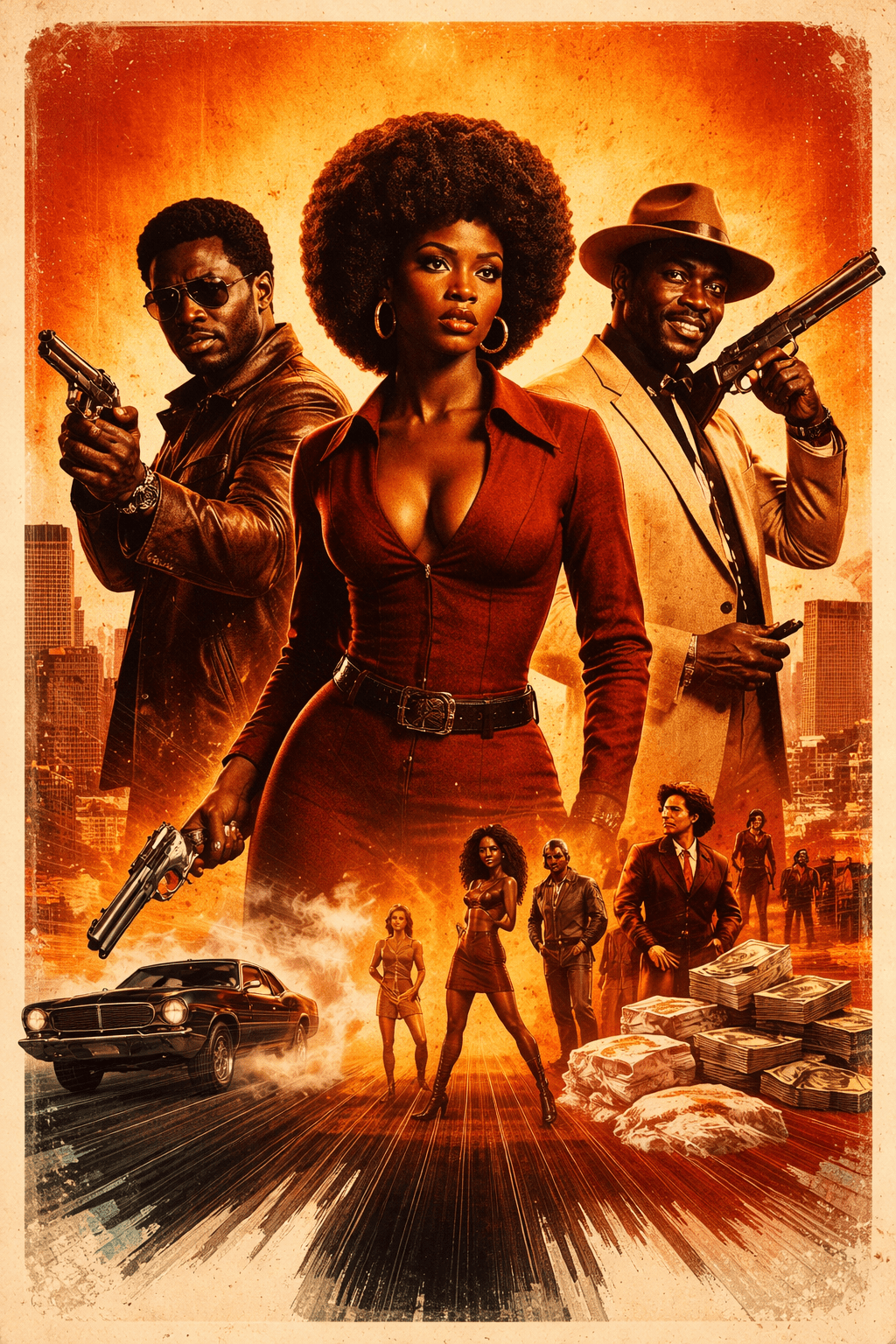
Blaxploitation arrived in the early 1970s like a door kicked off its hinges. For the first time, Black characters didn’t whisper. They strutted. They took revenge. They had agency, sexuality, power and presence, the same traits that the music industry later rewarded and marketed in stars like Diddy.
1. Black heroes who weren’t afraid to look the world in the eye
Shaft, Foxy Brown, and Truck Turner were characters who lived loudly and unapologetically. At a time when Hollywood preferred Black actors in servile roles, Blaxploitation films gave audiences something they weren’t used to seeing: swagger as survival.
2. Soundtracks that reshaped the culture
Isaac Hayes, Curtis Mayfield, James Brown — the music wasn’t just a backdrop. It became the heartbeat of an emerging Black aesthetic. The documentary reminds us that the entertainment industry often sells empowerment through sound and style, a concept Blaxploitation pioneered masterfully.
3. A breakthrough for Black talent
For a brief window, studios needed Black actors, Black musicians, Black stylists, Black writers. Jobs opened. Careers launched. A new creative class emerged.
In that sense, Blaxploitation was an early version of what the documentary points out: representation can feel like liberation, even when the systems behind it remain questionable.
The bad: stereotypes, commodification and the price of visibility
Just like the documentary illustrates the darker side of fame and power, Blaxploitation carried its own contradictions. It uplifted Black images while sometimes reinforcing harmful narratives, and the tensions were never subtle.
1. Crime, sex and violence became Hollywood’s shorthand for “Black hustle”
Studios quickly realized what sold and pushed films toward the extremes: pimps, pushers, vigilantes, drug dens and hypersexual imagery. While some of it was cathartic fantasy, much of it was caricature.
The documentary makes one thing clear: the entertainment industry will sell any version of Blackness that turns a profit, even if it harms the people it spotlights.
2. White studios controlled the purse strings
Although the faces were Black, the money and the decision-making weren’t. Hollywood extracted profit from Black pain and Black fantasy alike, steering the genre toward stereotypes rather than nuance.
It’s a dynamic that the Diddy documentary exposes in modern form: how power structures can hide behind charismatic symbols.
3. Black community backlash
Civil rights groups criticized the films for glamorizing the very issues communities were struggling to overcome. The fear was simple and real:
What happens when fiction becomes the only story outsiders believe?
4. The progress wasn’t built to last
When studios shifted their attention, support for Black creators evaporated. Representation proved temporary, and the system returned to normal. The short-lived nature of Blaxploitation foreshadowed a modern truth: visibility is not the same as structural change.
The performance of power
What makes the Diddy documentary a useful cultural mirror is not its content alone, but its context. It prompts us to confront how entertainment can:
- Amplify specific images of Blackness
- distort others
- reward spectacle
- Hide exploitation behind glamor
Blaxploitation functioned the same way: giving audiences a powerful image while quietly reminding them that the camera, the studio and the final cut belonged to someone else.
The documentary’s revelations echo the genre’s uncomfortable question:
Who is being empowered, and who is being used?
A legacy as complicated as the culture that created it
Blaxploitation’s impact is messy because Black representation itself has always existed in a tug-of-war between power and profit. It was groundbreaking and regressive, liberating and limiting, a contradiction that still defines Black media today.
The Diddy documentary not only revealed personal misdeeds but also reexamined the underlying structure. It uncovered the machinery driving Black fame, the toll of the imagery we admire, and the enticing danger of conflating visibility with safety.
Blaxploitation films blurred the line between empowerment and exploitation. The documentary reminds us that, decades later, we’re still navigating that blur.
Because the real question isn’t whether the imagery is powerful; It’s whether the people behind it actually are.
 The Yaptain's Corner
Leave a comment