
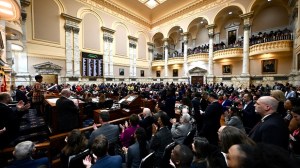
ANNAPOLIS, MD – Maryland is grappling with a projected $2.7 billion budget shortfall, marking the state’s most severe financial challenge in two decades. Analysts warn that without intervention, the deficit could balloon to nearly $6 billion by fiscal year 2030, raising concerns over potential tax hikes and public service cuts.
The deficit primarily arises from rising expenses associated with the Blueprint for Maryland’s Future, a major education reform effort focused on enhancing public education. Beginning in fiscal year 2028, this initiative is projected to encounter a $2 billion funding shortfall, which could escalate to $3.2 billion by 2030. Other contributing factors include higher Medicaid costs and a growing need for childcare subsidies.
Lawmakers are exploring options to bridge the shortfall. Senate President Bill Ferguson stated that “everything is on the table,” suggesting that tax increases could be considered, though they would need to preserve Maryland’s economic competitiveness. Governor Wes Moore has indicated his administration will prioritize spending reviews while setting a “high bar” for increasing taxes on Maryland families.
Recommendations to mitigate the crisis include utilizing the state’s $2.5 billion Rainy Day Fund and shifting $250 million in capital projects to bonds. However, these measures are seen as stopgaps rather than long-term solutions.
The fiscal challenges have sparked a debate among lawmakers, with Republicans advocating for spending cuts over tax increases. As the General Assembly prepares for its upcoming session, the choices ahead will significantly impact Maryland’s economic stability and its residents’ financial futures.
 The Yaptain's Corner
Leave a comment